September 03, 2025
Trust Traps in Voice Authentication: Can AI Imitations Break Biometrics?
For years, biometrics have been sold as the ultimate form of trust. Unlike passwords that can be guessed or stolen, your face, fingerprints, and voice seemed impossible to fake. Among these, voice authentication has quickly spread into banking, customer service, and even workplace access systems. The pitch was simple: no one else sounds like you.
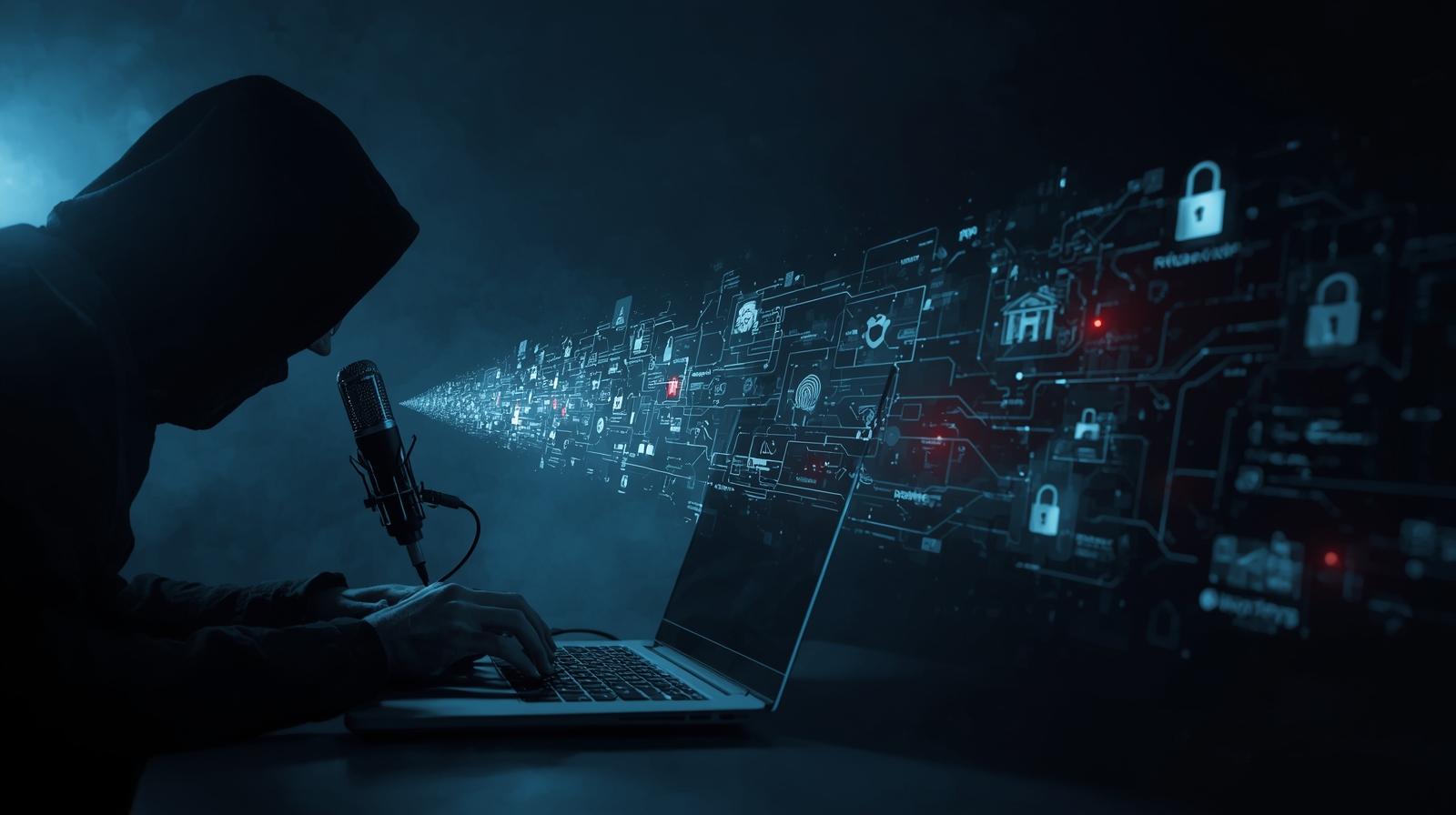
Artificial intelligence has made that promise dangerously fragile. Synthetic voice technology is now so advanced that an algorithm can mimic not just the tone of your voice, but its cadence, emotion, and subtle quirks. This creates what security experts call a trust trap. These are systems that appear reliable on the surface but are easily manipulated underneath.
The Rise of Voice Authentication
The appeal of voice-based security lies in convenience. There is no need to remember a password. No need to type a code. Just say a phrase, and the system confirms your identity.
In industries like banking, voice biometrics have been promoted as safer than traditional verification. Telecom companies use them to reduce fraud in call centers. Smart homes integrate them into access systems. The underlying assumption has always been that your voice is unique enough to be a signature.
That assumption is now in question.
Synthetic Voices as Security Threats
Advances in generative AI mean that voice cloning can be done with only a few seconds of recorded speech. Public interviews, social media videos, or even leaked voicemails can become the training data for a synthetic model.
This allows attackers to:
- Bypass banking systems by imitating a customer’s voice.
- Spoof trusted contacts to manipulate individuals.
- Trigger automated systems that rely on voice-only input.
Unlike passwords, once your voiceprint is compromised, you cannot reset it. Your voice is permanent, which makes the risk enduring.
The Trust Trap: Why It Feels Safer Than It Is
The danger of voice authentication lies in the illusion of security. Users assume their voice is harder to fake than a password. Companies promote it as a modern and frictionless defense.
Yet most systems are designed for usability rather than adversarial resilience. They may catch background noise or mismatches in basic features, but they are rarely tested against high-quality synthetic voices. This leaves a dangerous gap between perceived safety and actual security.
Beyond Identity Theft: Manipulating Human Trust
The risk is not only technical. Humans are wired to trust familiar voices. An AI that clones a loved one or employer can bypass not just machines but people. This dual vulnerability makes voice spoofing especially dangerous.
Imagine receiving a call from a “family member” urgently asking for money. Or a “colleague” requesting access credentials. These scams are already happening, and voice authentication systems amplify the stakes by normalizing voice as a proof of identity.
Countermeasures and Their Limits
To respond, researchers and companies are developing anti-spoofing tools, including:
- Liveness detection: Checking for real-time human signals like breath or background noise.
- Challenge-response systems: Asking users to repeat random phrases.
- Cross-modal biometrics: Combining voice with face, device, or behavior data.
- Synthetic voice detection models: Algorithms trained to spot artifacts of AI generation.
Each countermeasure has trade-offs. Stronger defenses often reduce convenience. Detection models can fall behind as generative AI improves. The arms race between attackers and defenders is constant.
The Future of Biometric Trust
Voice authentication is not going away. Its ease of use ensures continued adoption. But the trust trap it represents demands a shift in thinking. Biometric systems should never stand alone. Instead, they must be layered with secondary checks and designed under the assumption that imitation is always possible.
This raises bigger questions: If our bodies and voices can be copied, what forms of trust can remain unique? Should authentication be tied to things we are, or to things we control? The answer will define the next era of cybersecurity.
Conclusion: When Your Voice Stops Being Yours
Voice authentication promised a frictionless future where identity was simple, secure, and personal. AI has already shattered that illusion. A voice may still be yours, but in the digital realm, it can also belong to anyone who decides to clone it.
Trust, once anchored in the human body, must now be rethought for an era of synthetic identities. The real question is not whether voice authentication can be broken, but whether we can build systems resilient enough to survive when it inevitably is.