October 06, 2025
The Psychology of Review Fatigue Why Users Stop Giving Feedback
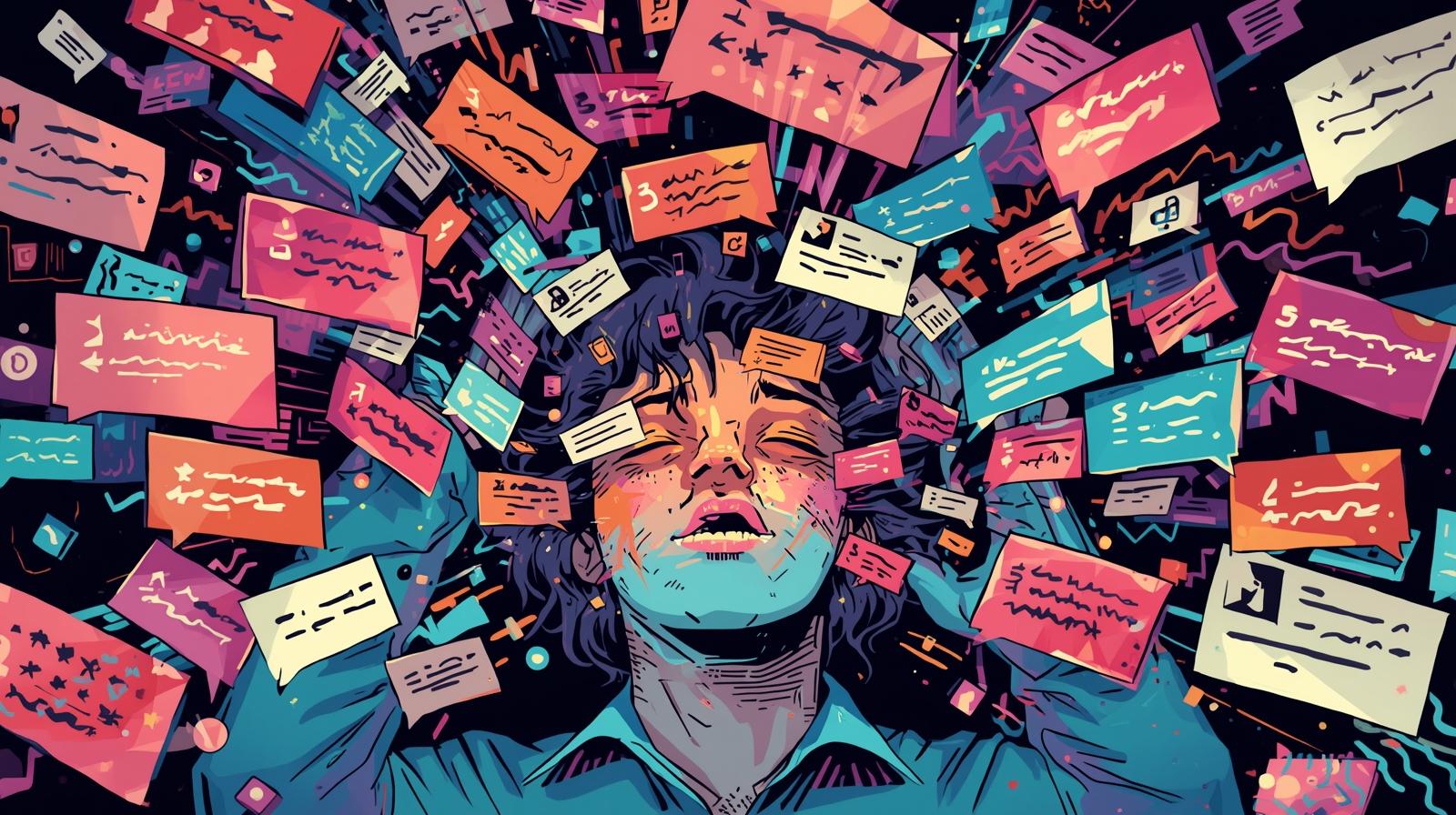
Every app, website, and service today asks for feedback. After every ride, purchase, or chat, there is a request: “Rate your experience.” For many users, what once felt like participation now feels like pressure. The constant demand for evaluation has created a new behavioral phenomenon known as review fatigue.
This fatigue is not just annoyance; it is psychological exhaustion rooted in decision overload, distrust, and poor design. Understanding why users disengage from reviews is critical for platforms that rely on authentic feedback to build trust and guide reputation systems.
Understanding Review Fatigue
Review fatigue occurs when users grow tired, indifferent, or resistant to providing feedback because they are asked too often or perceive little value in doing so.
Unlike general digital fatigue, review fatigue is tied to repetitive cognitive effort. The mind resists constant evaluation because it drains mental energy. After multiple prompts, the user starts to skip, rush, or abandon feedback entirely.
This fatigue does not happen overnight. It builds gradually as users realize that their reviews are rarely acknowledged or seem to make no visible impact.
The Psychology Behind Feedback Burnout
1. Decision Fatigue
Every rating request is a micro-decision. Should I respond? How many stars should I give? Do I write a comment? Over time, these small choices compound into decision fatigue.
Research shows that people have a limited capacity for daily decision-making. Once that threshold is crossed, they default to avoidance or minimal effort. In review contexts, this results in quick, shallow ratings or complete disengagement.
2. Cognitive Overload
Users today juggle multiple feedback systems: social media likes, app ratings, e-commerce reviews, and internal surveys. Each requires mental context switching. This constant evaluation environment taxes working memory, reducing motivation to contribute meaningful input.
3. Perceived Futility
When users feel that their feedback does not create change, they experience learned helplessness. The brain associates reviewing with wasted effort. Without visible outcomes—such as improved service or acknowledgement—users disengage entirely.
4. Emotional Exhaustion
For emotionally charged experiences, such as disputes or poor service, writing reviews demands emotional processing. When users encounter frequent prompts, they experience affective depletion—a psychological state where emotional energy runs out, leaving them indifferent or irritated.
5. Distrust and Skepticism
As fake reviews, paid feedback, and algorithmic manipulation rise, genuine users begin to distrust the process. They wonder whether their voices matter in a sea of automated responses. This distrust feeds into fatigue, as users no longer see feedback as a genuine dialogue but as system noise.
Design Flaws That Amplify Fatigue
Constant Interruptions
Platforms often request feedback immediately after interaction, disrupting the user flow. When feedback feels like an interruption rather than a choice, it becomes an irritant.
Overly Complex Forms
Long forms, mandatory questions, or unnecessary details increase cognitive friction. Users seeking convenience are discouraged by time-consuming or unclear surveys.
One-Sided Engagement
Most platforms collect reviews but rarely close the loop. Users are not shown how their feedback influenced decisions or improvements, leading to disconnection.
Excessive Gamification
Over-reliance on points, badges, or streaks turns reviewing into a chore. When users sense manipulation rather than meaning, motivation collapses.
Lack of Personalization
Generic prompts fail to recognize user history. A repeat customer asked the same generic question every time feels undervalued and unseen.
The Decline in Review Quality
Review fatigue not only reduces participation rates but also harms review authenticity. Users under fatigue tend to provide minimal input, rely on extremes (only 1-star or 5-star ratings), or repeat generic phrases.
This distorts reputation systems by skewing averages, flattening nuance, and creating unreliable data for trust algorithms.
Low-quality reviews lead to:
- Reduced predictive accuracy of recommendation engines.
- Bias reinforcement, as moderate voices disappear.
- Erosion of credibility, when platforms appear filled with hollow or automated feedback.
Authenticity declines, and with it, the entire ecosystem of digital trust.
Why Users Still Care About Reviews, But Not About Writing Them
Ironically, users suffering from review fatigue still rely heavily on other people’s reviews. They want to consume feedback but not produce it.
This paradox reveals the difference between trust dependency and trust contribution.
People depend on collective opinion to make safe decisions but increasingly avoid contributing their share due to emotional and cognitive cost. This imbalance weakens the feedback economy over time.
How Platforms Can Counter Review Fatigue
1. Limit Frequency and Context
Feedback should be requested strategically, not mechanically. Platforms can use behavioral analytics to detect meaningful engagement moments rather than prompting after every minor interaction.
For example, request reviews after sustained use, major milestones, or verified transactions instead of generic timing.
2. Use Adaptive Timing
Timing influences perception. Asking too soon feels pushy, while asking too late feels irrelevant. Adaptive algorithms can detect user readiness by analyzing dwell time, satisfaction patterns, and task completion signals.
3. Simplify and Personalize
Short, adaptive forms increase participation. Personalized prompts like “Did this experience meet your expectations today?” perform better than broad “Rate your experience” messages.
Reducing the number of rating dimensions also decreases cognitive load.
4. Close the Feedback Loop
Show users that their opinions matter. Platforms should provide feedback on feedback, such as notifications highlighting updates inspired by user reviews. Visibility turns effort into influence.
5. Encourage Reflection, Not Obligation
Framing matters. When feedback is positioned as a chance to improve community trust rather than a mandatory task, users feel valued instead of burdened.
Example: “Your input helps others make informed choices” has more motivational power than “Rate now.”
6. Integrate Passive Feedback Signals
Platforms can collect implicit trust data such as engagement duration, repeat visits, or refund rates to supplement active reviews. This reduces the need for constant prompts while maintaining insight accuracy.
7. Offer Rest Cycles
Just as attention fatigue benefits from rest, so does feedback behavior. Allowing users to pause review requests or control frequency gives them autonomy and reduces irritation.
Rethinking Feedback Ethics
The ethics of user feedback extend beyond privacy. It involves respecting mental bandwidth.
When platforms over-prompt, they inadvertently treat attention as an infinite resource. Ethical design acknowledges cognitive limits and emotional labor.
Meaningful feedback systems:
- Ask for input with purpose.
- Respect timing and context.
- Show visible reciprocity.
Building trust through restraint is more powerful than constant engagement pressure.
Measuring Review Fatigue in Data
Platforms can detect early signs of fatigue through behavioral metrics:
- Decline in response rates over repeated prompts.
- Increase in one-word reviews or extreme ratings.
- Drop in form completion after multiple interactions.
- Higher opt-out rates for survey participation.
These patterns indicate cognitive saturation and signal the need for redesign.
A New Model for Meaningful Feedback
To restore user trust and participation, platforms can adopt a quality-over-quantity approach.
- Contextual review triggers: Ask at moments of emotional or transactional significance.
- Balanced workload: Rotate review requests across users to distribute effort fairly.
- Reciprocal transparency: Share how feedback shapes moderation or policy.
- Human-centered UX: Focus on simplicity, empathy, and timing rather than gamified compulsion.
The goal is not to collect more reviews but to collect better ones.
Future of Feedback: From Fatigue to Flow
In the next phase of digital experience, feedback ecosystems will evolve from constant prompting to ambient understanding. Machine learning will interpret passive behaviors as indicators of satisfaction.
This does not mean removing human reviews but supporting them with smarter timing, contextual awareness, and psychological empathy.
Platforms that succeed will be those that understand that trust is not built by frequency, but by respect.
Closing Thoughts
Review fatigue reveals a fundamental truth about human interaction online. People want to be heard, not harvested for data.
When feedback feels like service rather than self-expression, fatigue sets in. When feedback feels meaningful, participation revives.
To rebuild authenticity, platforms must shift from extraction to empathy. By respecting attention, acknowledging contribution, and designing around human limits, they can transform review fatigue into renewed trust.
Wyrloop continues to explore how psychology, design, and technology intersect to shape ethical and authentic online feedback systems.