November 16, 2025
Holographic Legacy Seals: Verifying Reputations in Mixed-Reality Worlds
The line between digital life and physical life is dissolving. Virtual reality, augmented reality, and spatial computing are creating environments where people interact, trade, communicate, and collaborate across blended realities. As these mixed-reality worlds expand, a new question emerges. How do we verify identity and reputation when people exist as layered holographic personas rather than fixed profiles?
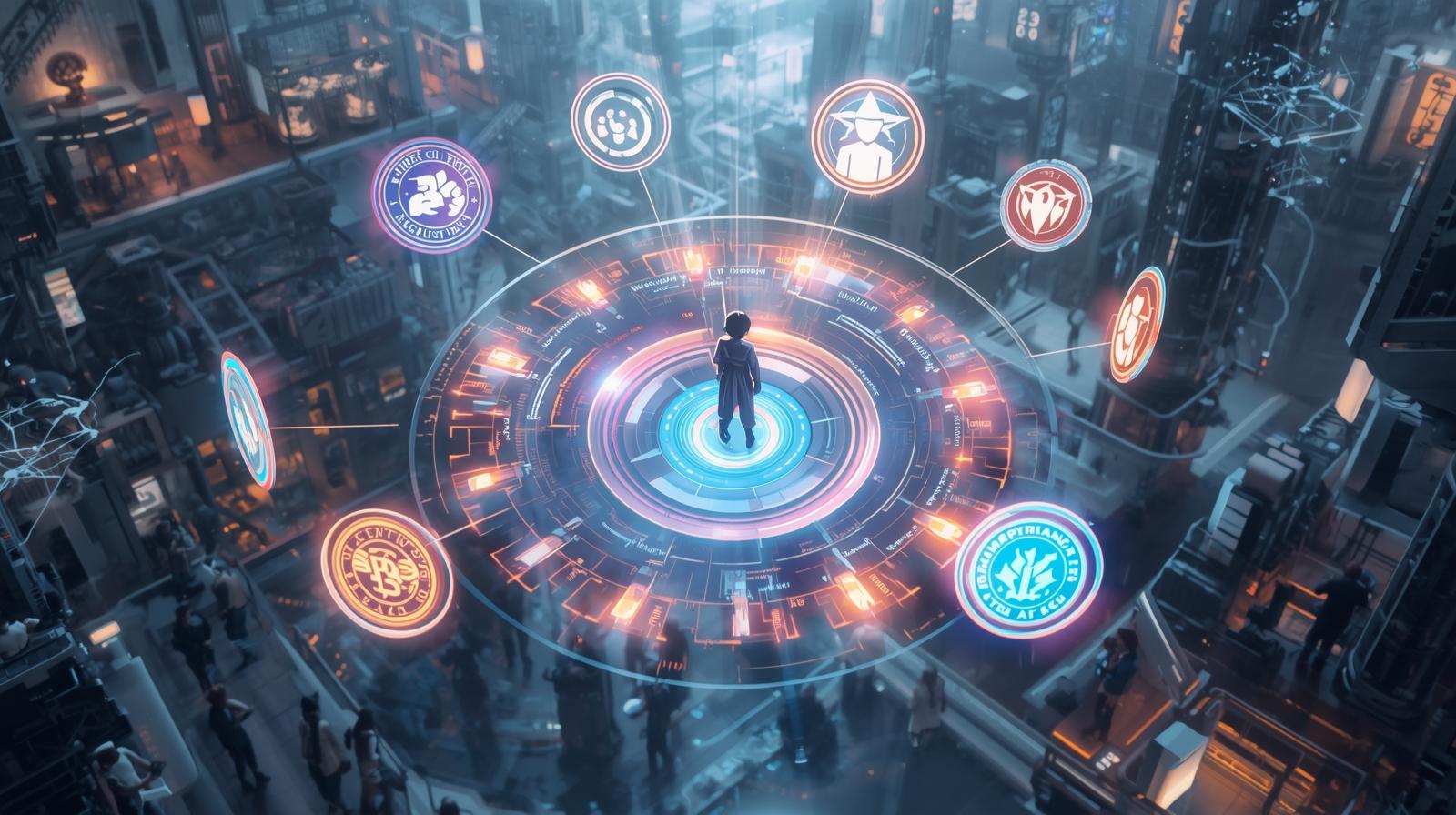
One of the emerging concepts in identity design is the holographic legacy seal, a persistent signature that communicates trustworthiness across physical and digital spaces. These seals function as visible proof of long term behavior, verified identity, and accumulated credibility. They are not just avatars or badges. They are multi dimensional trust artifacts that follow users across immersive ecosystems.
Holographic legacy seals represent a future where reputation becomes a living object, visible to all who interact with you. They are designed to solve a growing problem in mixed reality: the difficulty of knowing who to trust when identity is no longer confined to a single world.
Why Mixed Reality Needs New Reputation Systems
Traditional reputation markers such as reviews, ratings, or profile badges were built for flat digital environments. They work when interactions occur on websites or apps. They do not scale well into mixed reality where identities can shift rapidly and interactions feel instantaneous.
Challenges in immersive environments
- Users can appear in different forms through avatars or holograms
- Identity switching is easy and sometimes encouraged
- Virtual economies depend on trust between strangers
- Physical world cues such as body language or presence become unreliable
- Scams and impersonation are amplified by immersive realism
As reality layers combine, traditional methods of verifying trust become insufficient. Mixed reality requires identity tools that match its complexity.
What Are Holographic Legacy Seals
Holographic legacy seals are persistent three dimensional markers that represent verified trust and reputation in mixed reality environments. They function like holographic passports for identity, but with dynamic reputation data encoded inside.
Core characteristics of holographic legacy seals
- Multi dimensional representation of identity and trust
- Persistent visibility across worlds and platforms
- Dynamic updates based on user behavior
- Verification layers that distinguish authenticity from deception
- Adaptation to context such as commerce, socializing, or governance
These seals act as living identity signatures that summarize your digital legacy wherever you appear.
How Holographic Seals Establish Trust
In mixed reality, users can appear as stylized avatars, realistic projections, or abstract holograms. Holographic legacy seals create an anchor of authenticity by attaching reputation trails to these representations.
How seals build trust
- They display accumulated credibility from past interactions
- They provide quick visual cues of reliability
- They link to blockchain like records of verified behavior
- They reduce uncertainty when meeting new participants
- They make reputation portable across platforms
The goal is not to expose personal details. It is to show a trustworthy pattern of interactions that others can rely on.
The Technology Behind Holographic Seals
While the term sounds futuristic, several technologies already support the concept of holographic reputation.
Foundational technologies
- Persistent identity frameworks that store user history
- Spatial computing engines that render three dimensional objects
- Zero knowledge verification that proves trust without revealing data
- Decentralized identity systems that prevent impersonation
- Reputation ledgers that store cross platform reliability metrics
- Encrypted holographic projection for visual trust indicators
Together, these technologies create a reputation artifact that can exist anywhere the user goes in mixed reality.
Understanding Multi Layer Trust Encoding
The core innovation of holographic legacy seals is multi layer trust encoding. This approach does not present a single score or badge. Instead, it presents reputation through layered holographic signals that reflect different categories of behavior.
Types of encoded layers
- Authenticity layer that verifies identity
- Behavioral layer that highlights interaction quality
- Contribution layer that tracks positive participation
- Risk layer that visualizes trust boundaries
- Legacy layer that preserves long term reputation
- Context layer that adapts visibility based on situation
These layers create a holistic view of reputation without overwhelming users.
Reputation as a Visible Object
Unlike traditional online reputation, which is buried inside profiles or dashboards, holographic seals bring trust into the foreground. They appear beside your presence in mixed reality spaces, becoming part of your digital aura.
Effects of visible reputation
- People can make quick judgments with less risk
- Trust becomes part of immersive interaction design
- Virtual economies gain structural stability
- Identity scams decrease due to public verification
- Reputation becomes a social asset with real world influence
The seal becomes a visual representation of accumulated credibility.
The Social Impact of Holographic Trust Markers
Introducing visible reputation into mixed reality environments reshapes social interaction. People begin to perceive each other not only by appearance but by digital legacy.
Social shifts
- Users with strong seals become trusted guides or leaders
- Communities develop reputation norms
- Harmful behavior becomes more difficult to hide
- New forms of prejudice can emerge based on trust markers
- Reputation circles form around verified participants
Mixed reality introduces new social hierarchies that must be handled ethically.
The Dark Side of Immersive Reputation
As with any system of identity verification, holographic legacy seals come with risks. The more visible and influential reputation becomes, the more power it holds.
Potential dangers
- Users with low reputation may feel permanently disadvantaged
- Seals could create rigid social stratification
- Platforms might manipulate visibility to steer influence
- Reputation inflation could occur through fraudulent behavior
- Over reliance on seals may reduce human judgment
The challenge is to build systems that promote fairness, not digital elitism.
Balancing Privacy and Transparency
One of the biggest tensions in holographic reputation systems is the balance between privacy and transparency. Users want authenticity, but they also want control over personal information.
Strategies for balance
- Zero knowledge proofs for trust verification
- Selective visibility based on context
- User control over data layers
- Time bounded reputation visibility
- Separation of personal identity from trust score
Reputation must be visible, but identity must remain protected.
How Commerce Changes in Mixed Reality
Holographic legacy seals transform economic interactions by adding visible trust to virtual transactions. Virtual marketplaces become more efficient, safer, and more personalized.
Economic effects
- Sellers earn credibility through visible seals
- Buyers judge trust before engaging
- Fraud becomes easier to detect
- Disputes decrease due to reputation trails
- High reputation users receive premium placement
A mature reputation system stabilizes immersive economies, similar to how ratings shaped early e commerce.
Cross Realm Reputation Portability
As users move between virtual worlds, VR hubs, AR overlays, and physical interactions mediated through mixed devices, holographic legacy seals follow them. This creates a cross realm identity that stays consistent everywhere.
Benefits of portable reputation
- Users maintain credibility across platforms
- Scammers cannot rebuild identity in new realms
- Communities trust participants across shared spaces
- Virtual identity gains real world legitimacy
Portability prevents fragmentation and supports continuity.
How Wyrloop Evaluates Mixed Reality Reputation Tools
Wyrloop examines emerging identity and trust technologies with a focus on clarity, fairness, and user empowerment. For holographic legacy seals, we assess:
- Transparency of seal components
- User control and privacy protection
- Cross platform portability
- Resistance to manipulation
- Bias mitigation in trust calculations
- Ethical visibility rules
Platforms that prioritize user autonomy and protect against hidden influence earn higher ratings on our Mixed Reality Trust Index.
Toward Ethical Holographic Verification
The next decade will bring deeper integration of mixed reality into daily life. Reputation will serve as the backbone of these environments, and holographic legacy seals could become one of the most important tools for ensuring trust.
Principles for ethical design
- Reputation must be earned, not purchased
- Seal visibility must adapt to context
- Users must control their own trust layers
- Systems must prevent discrimination and bias
- Reputation resets must exist to allow redemption
- Platforms must commit to transparency
Ethical design ensures holographic verification enhances trust without creating digital control structures.
Conclusion
Mixed reality will fundamentally reshape identity and interaction. As physical and digital worlds merge, users will need reliable ways to assess trust instantly. Holographic legacy seals offer a powerful solution, encoding reputation into a living, portable, visually understandable form.
These seals will not simply verify identity. They will shape how people connect, collaborate, transact, and build community in immersive environments. The future of trust will be holographic, dynamic, and deeply interconnected.
To guide this evolution responsibly, developers must build systems that prioritize fairness, user control, and transparency. Only then can holographic legacy seals strengthen trust without constraining human freedom.