October 02, 2025
Brainwave Authentication Risks: Security and Privacy of Neural Logins
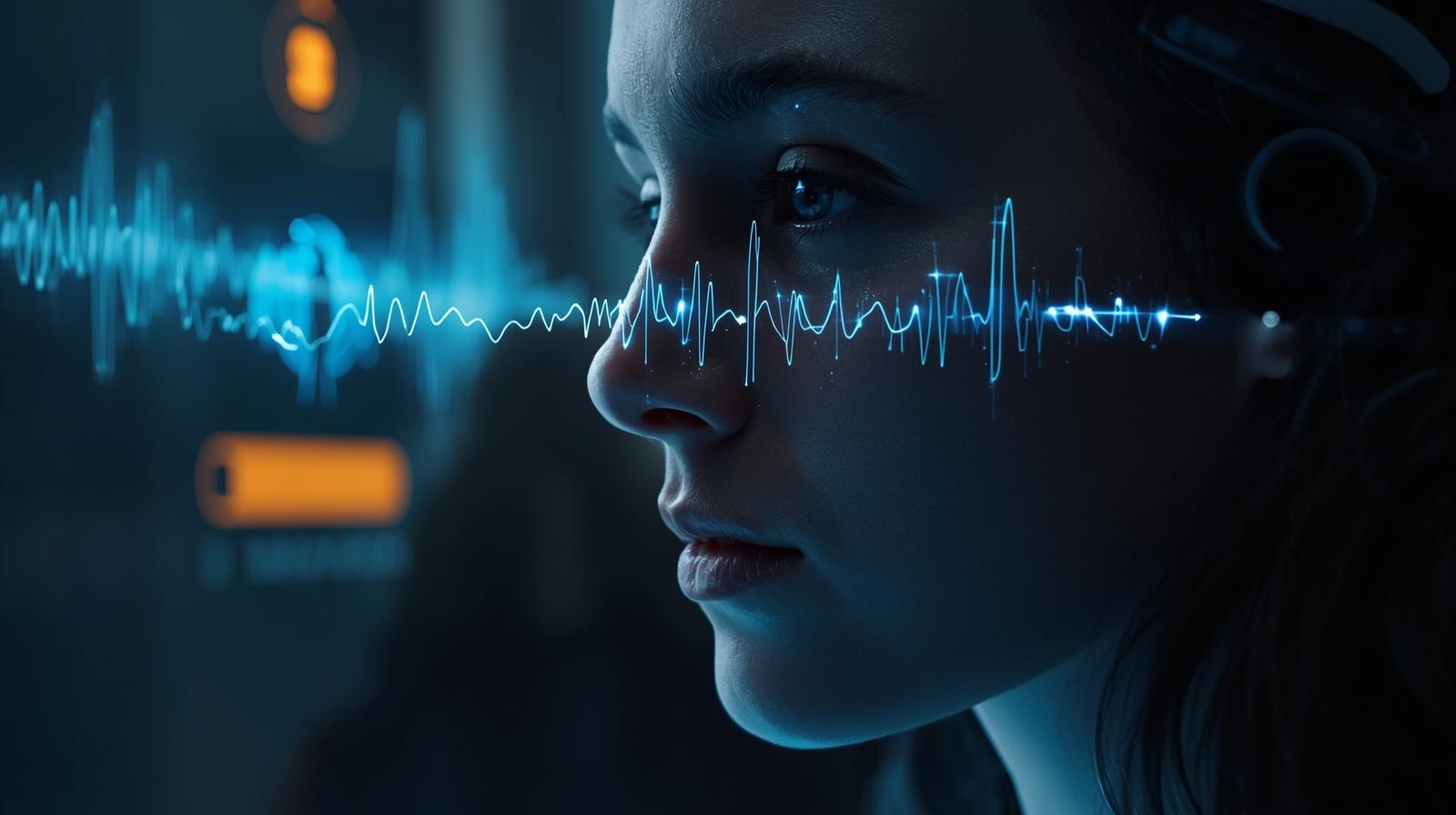
Advances in brain computer interfaces, abbreviated BCI, have opened the door to a new kind of biometric: neural signals. Companies and research labs are exploring how patterns of electrical activity, measured by EEG, MEG, or invasive electrodes, can authenticate users. The promise is compelling: a passwordless login that is uniquely tied to your cognitive profile. The risks are equally serious. Brainwave based authentication creates novel attack surfaces, extreme privacy concerns, and hard engineering challenges for safe deployment.
This article explains the technologies behind neural logins, the most important vulnerabilities and attack vectors, ethical and privacy implications, the current state of research, and pragmatic recommendations for secure implementation that preserve user dignity and agency.
How brainwave authentication works
Brainwave authentication relies on measuring electrical activity generated by the brain, then extracting features that appear stable and discriminative across individuals. Common approaches include:
- Evoked response identification: The system presents stimuli, such as tones or visual patterns, and measures the resulting event related potentials. The timing and amplitude patterns can serve as biometric fingerprints.
- Resting state signatures: Rather than stimulus driven responses, some methods analyze spontaneous oscillatory patterns while the user is relaxed or performing a neutral task.
- Task based profiles: A short cognitive task, like mental imagery or counting, produces reproducible patterns used for matching.
- Machine learning pipelines: Feature extraction and classification models map recorded signals to identities, often using neural networks or statistical classifiers.
Hardware ranges from consumer EEG headsets with dry electrodes to clinical systems with wet electrodes, and in research contexts, implanted arrays. Each hardware choice affects signal fidelity and risk profile.
Unique security and attack vectors
Brainwave authentication differs from fingerprints or face recognition in important ways. Neural signals reveal inner states, they can change with mood and health, and they are not easily revoked. Key risk categories include:
Signal replay and synthesis
Recorded neural responses could be replayed to a sensing device, or synthetic signals could be generated that mimic a target profile. High level detection can attempt to spot replay artifacts, but robust replay resistance is a difficult engineering problem.
Remote inference and side channel leakage
Some BCIs require only scalp contact, but signals can be weak. Adversaries may attempt to infer neural activity through side channels, such as EM emissions, compromised headsets, or intermediary devices that capture raw telemetry. Even coarse activity may be sufficient for model inversion attacks.
Template theft and irreversible biometrics
Once a neural template or model is stolen, the user cannot change their brain pattern the way they change a password. Template compromise therefore has permanent consequences for identity.
Coercion and forced authentication
Neural credentials can be obtained under duress. Unlike a password that can be withheld, a targeted user can be compelled to wear a headset and authenticate.
Sensor compromise and firmware attacks
The sensors and firmware that collect neural data are attractive targets. Malicious firmware can alter readings, inject spoofed signals, or exfiltrate raw brain data for later abuse.
Model inference and privacy leakage
Machine learning models used for classification can leak information about training subjects, allowing attackers to infer health conditions, emotional states, or other sensitive attributes from model parameters or outputs.
Cross session instability and false rejection
Variability in neural signals due to fatigue, medication, or stress increases false negative rates. Overly aggressive thresholds can lock out legitimate users, while lax thresholds increase spoofing risk.
Privacy implications beyond standard biometrics
Neural data contains far more than identity cues. It can carry signals correlated with medical conditions, cognitive traits, emotional states, and private thoughts. Special privacy concerns include:
- Medical inference: Patterns may reveal neurological disorders, sleep patterns, or medication effects.
- Cognitive profiling: Models could infer attention, susceptibility to persuasion, or stress levels.
- Longitudinal tracking: Continuous or frequent authentication events create time series that map mental life.
- Consent complexity: Users may not appreciate the full set of inferences possible from their brain data.
- Psychological harm: Knowing that inner states are recorded may change user behavior, create anxiety, or chill free thought.
Because of these risks, neural signals should be classified as highly sensitive personal data in regulatory and design schemes.
State of research and practical limitations
Academic and industry efforts have demonstrated feasibility for controlled modalities, often under laboratory conditions. Important caveats include:
- Signal variability: Lab performance does not always translate to noisy real world settings.
- Hardware constraints: Consumer devices trade accuracy for convenience, increasing error rates.
- Spoofing research: Proof of concept attacks have shown vulnerabilities, but published defenses are still evolving.
- Lack of standards: There is no mature, widely adopted standard for neural biometric enrollment, template protection, or revocation.
The current research suggests neural authentication may augment, but not replace, multi factor systems for many years.
Ethical and regulatory considerations
Given the sensitivity of neural data, ethical frameworks and regulatory safeguards are essential. Key principles include:
- Informed consent: Users must receive clear, comprehensible explanations of what data is collected, how it is used, and what inferences are possible. Consent must be revocable.
- Data minimization: Collect only the minimal neural signal needed for authentication, discard raw data whenever possible, and avoid storing long term archives.
- Purpose limitation: Explicitly prohibit secondary uses such as profiling for marketing, surveillance, or employment decisions.
- Strict access controls: Limit who and what can access raw neural traces, enforce strong logging and auditability.
- Rights to deletion and portability: Provide users mechanisms to delete templates and obtain verifiable evidence of deletion.
- Independent oversight: Third party audits and ethics review boards should evaluate deployments.
Regulators should treat neural biometrics as a sensitive category, requiring higher protection than conventional biometrics.
Practical recommendations for secure implementation
Organizations considering neural authentication should adopt conservative, defense in depth approaches. High level recommendations include:
-
Use neural signals as one factor in multi factor authentication
Combine brainwave credentials with possession factors, such as hardware tokens, and knowledge factors when appropriate. Avoid single factor reliance on immutable biometrics. -
Protect templates with strong cryptography and template protection techniques
Apply non invertible transforms, secure multiparty computation, or template encryption with hardware backed keys. Avoid storing raw signals in persistent form. -
Design for liveness and anti spoofing
Integrate challenge response mechanisms that require user interaction, randomize stimuli, and count on temporal characteristics that are hard to fabricate. Avoid deterministic prompts that are easy to record. -
Harden device and firmware security
Use tamper resistant hardware, signed firmware, secure boot, and regular supply chain audits. Treat headsets and dongles as critical security appliances. -
Limit data retention and apply strict access policies
Retain only derived classifiers or protected templates, purge raw waveform data immediately, and log all access with strong monitoring. -
Provide revocation and re enrollment pathways
Design systems that allow users to retire compromised templates, combined with fallback authentication flows. -
Conduct privacy impact assessments and independent audits
Before deployment perform formal assessments, threat modeling, and third party audits focused on privacy, security, and usability. -
Monitor for misuse and anomalous patterns
Implement behavioral monitoring to detect unusual authentication attempts, mass template requests, or exfiltration attempts. -
Offer clear user control and transparency
Provide dashboards that show how templates are used, offer opt outs, and present understandable risk disclosures. -
Limit high stakes applications until maturity is proven
Avoid using neural authentication for life altering functions, such as medical record access or legal authorizations, until community standards and safeguards are mature.
Guidelines for researchers and vendors
Researchers and vendors should follow best practices that avoid normalizing invasive or risky deployments:
- Publish anonymized attack and defense research responsibly, with red team coordination and disclosure timelines.
- Build open standards and interoperability frameworks that prioritize privacy.
- Engage ethicists, patient advocates, and legal experts early, not after deployment.
- Design opt in pilots with strict oversight, data minimization, and participant protections.
What users should know and do
Users contemplating neural logins should proceed cautiously:
- Ask vendors what raw data is captured and for how long it is stored.
- Prefer systems that allow on device processing, with no cloud retention of raw signals.
- Demand multi factor fallbacks and revocation procedures.
- Evaluate whether the convenience justifies the privacy trade offs.
- Advocate for regulatory protections and transparent audits.
Conclusion: proceed with extreme caution
Brainwave authentication offers intriguing possibilities for seamless, user friendly access. At the same time, neural signals are intimate, revealing, and effectively permanent as identity markers. The risk landscape includes spoofing, template theft, coercion, and deep privacy intrusions. Because the costs of compromise are high and irreversible, neural authentication should be deployed only with strong multi factor architectures, rigorous template protection, independent oversight, and strict legal safeguards.
Until standardization, robust anti spoofing techniques, and regulatory frameworks exist, brainwave based logins are best confined to low risk experiments and opt in research pilots. When handled with care, transparency, and respect for user autonomy, neural biometrics can be a valuable addition to authentication toolkits. When rushed or weaponized, they become a permanent and personal point of surveillance. The difference will be in design, policy, and the seriousness with which society treats the privacy of the mind.