December 07, 2025
Biometric Deception How AI Can Forge Fingerprints and Faces
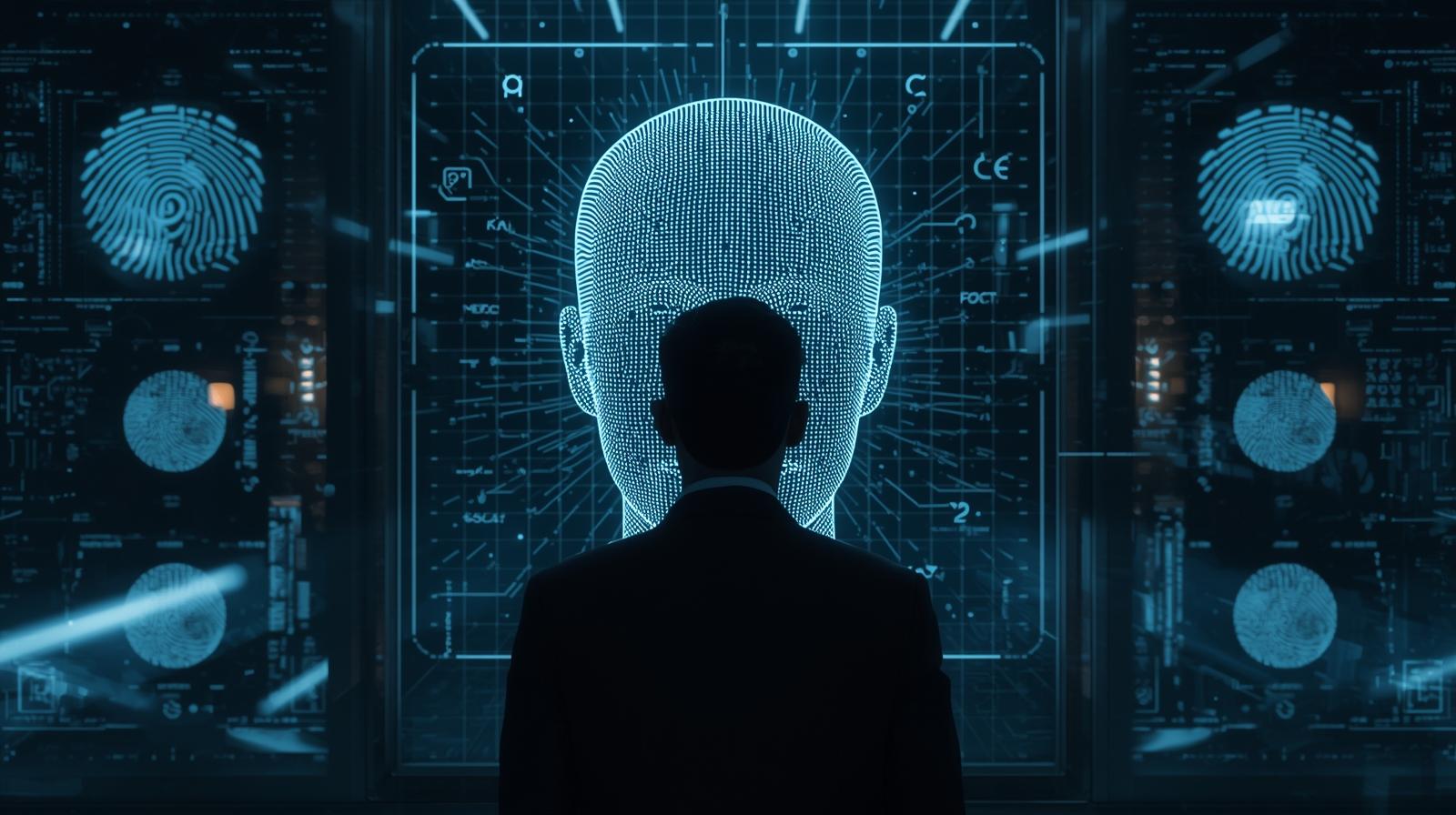
Biometric data was once seen as the ultimate security measure. Fingerprints, facial features, iris patterns, and voice signatures were believed to be immutable and uniquely tied to the individual. Unlike passwords, biometrics could not be forgotten, guessed, or shared. They represented truth tied directly to the body. Today that assumption no longer holds. Artificial intelligence has begun to forge fingerprints, synthesize faces, and manipulate identity traits with unprecedented precision. This emerging capability is known as biometric deception, and it challenges the future of authentication and trust.
Biometric deception involves AI systems that generate or imitate biometric markers convincingly enough to bypass security checks. These systems learn from vast datasets of human features, then create synthetic fingerprints or faces that appear authentic to both human observers and automated verification tools. As biometric systems become more widely adopted in banking, travel, workplaces, and digital platforms, the risks associated with forged biometrics grow significantly.
Biometric deception reveals that identity is no longer guaranteed by biology alone. When AI can create replicas indistinguishable from real features, the foundation of digital trust becomes unsettled.
The Rise of Synthetic Biometrics
AI systems capable of generating synthetic fingerprints and faces rely on pattern learning. Neural networks analyze thousands of biometric images and distill their structural principles. Instead of copying any single fingerprint or face, AI models learn how to produce new ones that share deep similarities with legitimate patterns.
Synthetic faces are already common in deepfake technology. They combine features from multiple sources to form lifelike composites that do not match any real person, yet appear authentic. Synthetic fingerprints follow a similar principle. They emulate ridge structures, curvature patterns, and spatial relationships that fool biometric scanners into granting access.
Synthetic biometrics evolve quickly because they do not require physical access to a person. They only require digital samples or publicly available images.
AI introduces new pathways for identity replication.
How AI Learns to Forge Fingerprints
AI can forge fingerprints by analyzing large datasets of real prints and modeling the mathematical relationships between ridges, bifurcations, and whorls. These models can generate prints that resemble the structure of legitimate fingerprints without duplicating any specific individual.
Some systems specialize in creating fingerprints that match multiple partial print databases. These general purpose prints can bypass scanners that rely on incomplete patterns. The same forged print may be accepted as valid across different systems.
Forged fingerprints challenge the belief that fingerprints represent unbreakable identity markers.
The Vulnerability of Facial Recognition
Facial recognition systems evaluate geometry, proportions, and landmark positions. AI generated faces can replicate these features easily. Deep neural networks can create faces that match the mathematical thresholds used by recognition systems.
Platforms that rely on facial verification for account access or identity confirmation become vulnerable. If an attacker generates a face close enough to the target’s biometric pattern, the system may accept it. Even subtle similarities can mislead automated matches if the detection system is lenient.
The more biometric systems scale, the more attractive they become to AI based deception.
When Public Images Become Biometric Assets
Modern digital life includes countless photos shared publicly. Social media, video calls, livestreams, and profile images all contribute to biometric exposure. Every public image becomes a potential training sample for AI systems that forge faces.
Users rarely consider the biometric value of their photos. They assume images are expressions, not identity keys. AI turns these images into data sources that can recreate faces convincingly enough for impersonation.
Biometric privacy becomes nearly impossible to protect.
The Illusion of Biometric Safety
Many platforms present biometrics as the safest form of authentication. Fingerprint sensors appear secure. Facial unlocking feels convenient. Voice recognition seems futuristic. Yet the safety of biometrics relies on the assumption that they cannot be duplicated.
AI destroys that assumption. Once a biometric trait is compromised, it cannot be changed. A person can reset passwords, but cannot reset their face. The permanence of biometrics becomes a liability when AI can forge them.
The illusion of safety hides deeper vulnerabilities.
The Dangers of Biometric Overreliance
When platforms depend heavily on biometrics, they reduce alternative authentication paths. If the biometric layer fails, systems may have no fallback except manual verification. Overreliance increases exposure to exploitation.
Biometric deception exploits this dependence. Attackers focus on the single layer that guards everything. As systems eliminate passwords in favor of biometrics, they shift from multi factor security to single point vulnerability.
Security must remain layered, not singular.
AI Assisted Identity Theft
Traditional identity theft involves stolen information. AI assisted identity theft involves stolen features. Attackers can generate a synthetic face close enough to the victim’s features to unlock accounts, request government services, or impersonate the individual in video calls.
Synthetic voices can match tone and cadence convincingly enough to mimic speech patterns. AI creates entire identity replicas that operate autonomously, making impersonation scalable.
Identity theft evolves from information misuse to identity replication.
The Loss of Trust in Biometric Evidence
Biometric evidence historically played a powerful role in legal proceedings. Fingerprints, facial matches, and voice recordings were treated as objective facts. AI undermines this confidence. If biometric features can be forged, biometric evidence loses its authority in legal and forensic contexts.
Courts may need new standards to determine whether biometric matches came from real individuals or synthetic generation. The burden of proof shifts away from simple comparison.
Trust becomes a matter of interpretation, not certainty.
Platform Responsibility in Preventing Biometric Deception
Platforms that rely on biometrics must adopt systems capable of detecting synthetic forgeries. This includes evaluating texture irregularities, identifying generative model signatures, and monitoring inconsistencies in image artifacts or frequency patterns.
Platforms must also reduce blind dependence on visual similarity. Behavior based signals, environmental context, and cross channel verification can strengthen authentication. Multi factor approaches must remain central to protection.
Biometrics must enhance security, not replace it entirely.
The Role of Liveness Detection
Liveness detection verifies that biometric input comes from a real person rather than a synthetic model. It requires movement, depth cues, environmental interaction, or unpredictable prompts. While helpful, liveness detection can also be manipulated if AI models simulate movement convincingly.
Advanced attackers can combine synthetic faces with dynamic animations to bypass liveness checks. Systems must continue evolving to keep pace with deception methods.
Security requires constant adaptation.
Cultural and Ethical Implications
Biometric deception carries profound cultural implications. It challenges societal norms about identity. It raises privacy concerns about how personal features become data fodder for adversarial AI. It questions the ethics of generating synthetic identities that resemble real individuals.
Different cultures place different emphasis on facial identity, fingerprints, or vocal features. Biometric deception may undermine trust in traditional identity rituals or community recognition practices.
Ethics must remain central as biometric technologies advance.
Economic Incentives Behind Biometric Forgery
Biometric deception attracts actors seeking financial gain. Attackers may imitate individuals to access financial accounts, apply for loans, or bypass fraud checks. Criminal networks may automate biometric generation to scale scams across multiple platforms.
As economic incentives grow, biometric deception will become more common. Platforms must prepare for an increase in synthetic identity attacks.
The market for deception grows wherever trust becomes valuable.
Government and Regulatory Challenges
Governments face difficulty regulating biometric deception because technologies evolve rapidly while legal frameworks adapt slowly. Biometric laws vary widely across regions. Some enforce strict privacy, while others permit widespread biometric collection.
Regulators must create standards for detecting synthetic biometrics, handling compromised features, and maintaining transparency about AI risk. Without consistent regulation, platforms may implement weak protections.
Global coordination becomes essential.
The Future of Biometric Security
Biometric systems must evolve beyond pattern matching. Future systems may incorporate dynamic traits that are harder to forge, such as micro expressions, spontaneous gestures, thermal signatures, or real time physiological markers.
AI can support this evolution by identifying subtle cues that synthetic systems struggle to reproduce. This creates a layered approach where biometrics become one part of a more holistic identity verification system.
Security must balance convenience with resilience.
How Wyrloop Evaluates Platforms for Biometric Risk
Wyrloop assesses biometric systems for susceptibility to synthetic deception, strength of liveness detection, alternative authentication options, and long term trust safeguards. Platforms that protect users against biometric forgery earn higher ratings in our Biometric Integrity Index.
Conclusion
Biometric deception reveals a fundamental shift in identity security. AI can now forge fingerprints and faces with precision that challenges the very systems designed to authenticate individuals. As biometrics become widespread, the risk of forgery increases. Platforms, governments, and users must adapt to a world where identity becomes replicable.
Biometrics cannot remain the sole foundation of trust. They must integrate with multi layer defenses, transparency mechanisms, and ethical design. The future of identity security depends on accepting that even the most personal traits can be imitated.
AI forces society to reconsider what it means to prove who we are.